 Skip to content
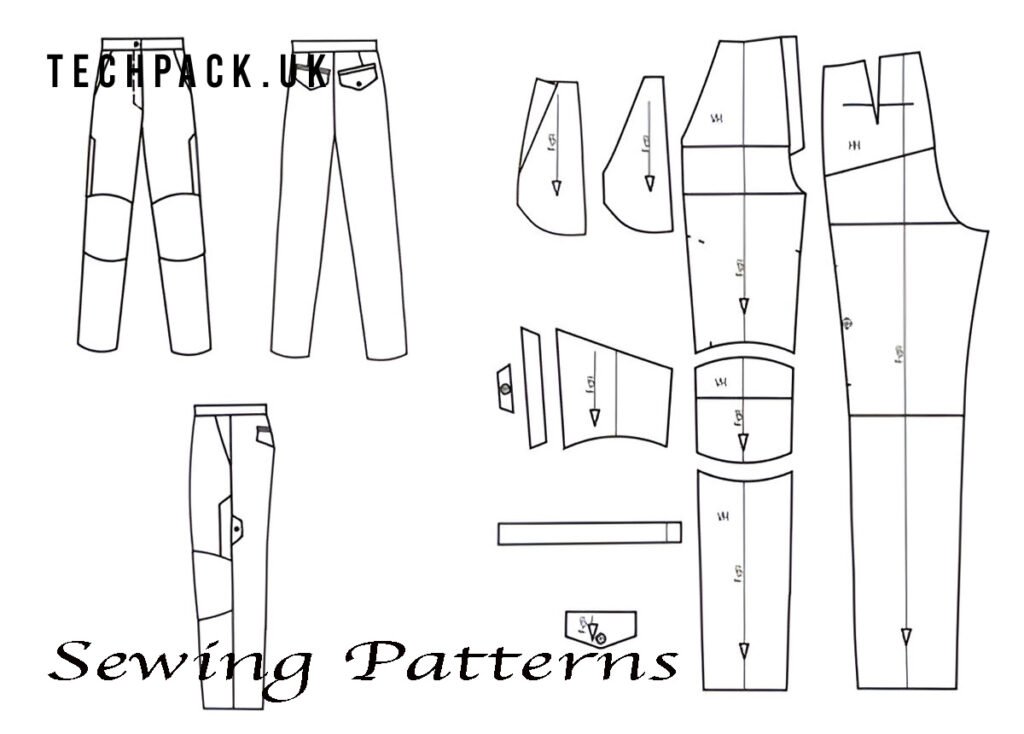
When it comes to fashion design and attire generation, sewing patterns are the diagram that changes inventive sketches into wearable garments. For originators, manufacturers, and brands, understanding sewing designs is vital since they decide fit, comfort, and the general quality of the garment. At techpack.uk, we specialize not only in Fashion Tech Pack services but also in directing brands through the importance of sewing patterns in the generation process.
In this web journal, we’ll explore everything you require to know about sewing patterns—from what they are, why they matter, their types, and how they interface with Tech Packs in present-day apparel production.
What Are Sewing Patterns?
A sewing pattern is the basic diagram of garment construction. It is a template—traditionally made from paper but presently frequently delivered as advanced files—that contains the exact traces, estimations, and markings required to cut fabric pieces and collect them into a total garment.
Think of it as a guide that changes design thoughts into reality. Whereas a designer’s portrayal captures the imaginative vision, the sewing design interprets that inventiveness into specialized precision, guaranteeing each crease, bend, and crease comes together seamlessly.
Patterns regularly break down a garment into partitioned components such as the bodice, sleeves, collars, waistbands, gasp legs, sleeves, or pockets. Each piece of the design speaks to one area of the garment and is carefully measured and molded so that when sewn together, they make the final design.
Without precise sewing designs, indeed, the most inventive or in vogue concepts can come up short in execution. Ineffectively drafted designs may result in pieces of clothing that do not fit properly, wrap ungracefully, or fall flat to keep up with the planning outline. In differentiation, a well-designed design ensures consistency, whether the garment is made once as a model or duplicated thousands of times in mass production.
In modern fashion, sewing patterns can be:
- Hand-drafted on paper, regularly by gifted design creators utilizing rulers, bends, and measuring tools.
- Digitally created with CAD software, permitting simple alterations, grading (sizing), and sharing with producers around the world.
- Pre-made commercial designs, accessible for buy by domestic sewers and small architects looking for ready-to-use templates.
Ultimately, sewing designs bridge the crevice between inventiveness and common sense. They serve as the establishment for Fashion Tech Packs and generation planning, guaranteeing that the garment reflects both the designer’s vision and the customer’s desires.
Why Sewing Patterns Matter

- Accuracy in Fit – Patterns help guarantee garments fit the body estimations they were designed for.
- Consistency in Production – Whether you’re making one test or 10,000 pieces, patterns keep measuring and design consistent.
- Saves Time and Money – Clear patterns minimize trial and error, diminishing waste in inspecting and production.
- Supports Creativity – Architects can explore with diverse styles, whereas depending on organized designs to make them wearable.
- Essential for Tech Packs – Patterns are frequently referenced in Tech Packs, guaranteeing producers follow the correct construction details.
Perfect 👍 Let’s expand your “Types of Sewing Patterns” area with more detail, clarifications, and cases to make it wealthier and more engaging for perusers:
Types of Sewing Patterns
There are several different categories of sewing designs, and each serves a one-of-a-kind reason depending on the garment type, generation strategy, and planning audience. Whether you’re a design understudy, a free originator, or a large-scale producer, understanding these sorts is pivotal for choosing the right approach to clothing creation.
1. Basic Block Patterns (Slopers)
An essential square design, also known as a sloper, is the establishment of garment design. It’s a basic, fitted design with no fashion details—just the basic estimations and shapes of the body. Designers utilize square designs as a beginning point to create numerous design variations.
For example:
- A fundamental T-shirt block can be controlled into a curiously large tee, slim-fit shirt, or indeed an edited top.
- A dress block can evolve into a handful of silhouettes, from A-line dresses to wrap dresses.
By starting with a square, originators save time while guaranteeing precision and fit stays consistent.
Commercial Sewing Patterns
These are ready-made patterns that can be acquired from pattern companies or sewing retailers. They are particularly prevalent with hobbyists, DIY sewers, or small brands who may not have access to proficient design makers.
- They ordinarily come in printed paper arrange or digital PDFs.
- Instructions are regularly included, making them user-friendly for beginners.
- They cover a wide extend of garments, tops, skirts, coats, pants, and indeed accessories.
However, commercial designs are generic, meaning they may not continuously fit impeccably or adjust with a specific brand’s measurements and style requirements.
Custom Sewing Patterns
Custom patterns are tailor-made for a particular brand, collection, or personal client. These patterns take into account special estimations, brand character, and plan details.
For example:
- An extravagant fashion brand may ask custom patterns for a modern eveningwear line to guarantee culminating hanging and a signature fit.
- An activewear brand might create custom patterns for stockings and sports bras to bolster functionality and performance.
Custom sewing designs are fundamental for proficient clothing brands, as they ensure precision and exactness that off-the-shelf designs cannot give.
Digital Sewing Patterns

The rise of innovation has changed the fashion industry, and computerized sewing designs are presently standard in numerous companies. Using CAD (computer-aided design) software, creators can make, alter, and review patterns with ease.
Benefits include:
- Faster Adjustments – Patterns can be adjusted right away without redrawing.
- Global Collaboration – Digital records can be shared with producers anywhere in the world.
- Sustainability – Diminishes paper waste and speeds up the prototyping process.
Digital sewing patterns are frequently utilized in conjunction with Fashion Tech Pack services, as both records guarantee consistency between creators and producers.
Graded Patterns
A graded pattern has been balanced to fit numerous sizes (e.g., XS, S, M, L, XL). Evaluating guarantees that the same garment design fits over a range of body types while keeping up extents and style integrity.
For instance:
- An evaluated T-shirt pattern permits the same design to be created in numerous sizes without distorting the shape.
- Jeans evaluated from size 26 to measure 36 keep up a steady fit and outline over the size range.
Grading is fundamental for mass generation, as it permits fashion brands to scale plans effectively while meeting differing customer needs.
Why These Types Matter
Understanding the different sorts of sewing designs helps fashion experts make more astute decisions:
- Hobbyists may depend on commercial designs for simplicity.
- Established brands require custom designs to stand out.
- Manufacturers depend on evaluated and advanced designs to convey consistency and efficiency.
At techpack.uk, we regularly coordinate different design types within our Fashion Tech Pack services, guaranteeing that brands get proficient documentation that makes their production process consistent.
How Sewing Patterns and Tech Packs Work Together
A Tech Pack is the detailed instruction manual for producers, and sewing patterns are one of its most basic components.

Here’s how they connect:
- The Tech Pack outlines design details, materials, sewing, trims, and sizing.
- The sewing pattern gives the correct measurements and shape of each fabric piece.
- Together, they expel mystery and guarantee the last garment matches the unique design.
For example, at techpack.uk, we combine Fashion Tech Pack services with master sewing design to give brands everything they require for smooth production.
The Process of Developing Sewing Patterns
- Initial Design Sketch – Creators make a level portrayal or illustration of the garment.
- Block Pattern Creation – A base design (sloper) is developed.
- Pattern Manipulation – Alterations are made to coordinate the plan, such as changing necklines, sleeves, or length.
- Adding Crease Allowances & Markings – Specialized details like indents, darts, and crease lines are included.
- Prototype Testing – A fabric test (toile or muslin) is sewn to test the pattern’s accuracy.
- Pattern Grading – The design is scaled to diverse sizes.
- Final Pattern Endorsement – Once tried and endorsed, the design is prepared for bulk generation.
Case Study: How Sewing Patterns Help a Start-Up Brand
Envision a small start-up brand in London needing to dispatch a capsule activewear collection. Without patterns, their tests might not fit legitimately, resulting to wasted fabric and money.
By working with techpack.uk, they received:
- A Fashion Tech Pack with detailed instructions.
- Custom Activewear sewing patterns for stockings and sports bras.
- Pattern reviewing to cover sizes XS–XL.
- Prototype testing before bulk manufacturing.
The result? Their garments were steady, fit flawlessly, and they were able to dispatch confidently without delays or exorbitant mistakes.
Benefits of Professional Sewing Patterns

- ✅ Professional fit across multiple body types.
- ✅ Easy scaling for size ranges.
- ✅ Reduces waste and production delays.
- ✅ Increases brand credibility with consistent quality.
- ✅ Essential foundation for tech pack services.
Final Thoughts
In the fashion industry, subtle elements contrast a normal garment and an effective collection. Sewing patterns are more than fair templates—they are the spine of your generation handle. Combined with a proficient Fashion Tech Pack, they guarantee your thoughts are communicated clearly to producers and brought to life precisely as you imagined.
At techpack.uk, we provide both Tech Pack services and guidance on sewing designs to help originators, start-ups, and established design brands succeed in today’s competitive market. Whether you’re planning activewear, loungewear, swimwear, or high-fashion collections, having the right designs ensures your garments meet professional standards of fit and quality.
If you’re prepared to take your plans to another level, let us help you make proficient sewing designs and Fashion Tech Packs that provide you with a competitive edge.
FAQs About Sewing Patterns
- What is the purpose of a sewing pattern?
A sewing pattern serves as a guide for cutting and adding texture to a garment, guaranteeing a legitimate fit and construction.
- Do I need sewing patterns if I currently have a Tech Pack?
Yes. Whereas a Tech Pack gives detailed information, sewing designs give the genuine formats required to cut and sew garments accurately.
- Can sewing designs be digital?
Absolutely. Many architects presently utilize CAD software to make advanced designs for simpler scaling and editing.
- How do sewing patterns help with mass production?
Patterns guarantee consistency over each unit delivered, no matter how huge the order.
- Can techpack.uk create custom sewing patterns?
Yes. At techpack.uk, we offer custom Fashion Tech Pack services along with a sewing pattern bolster to offer assistance to brands in accomplishing professional-quality production.
